
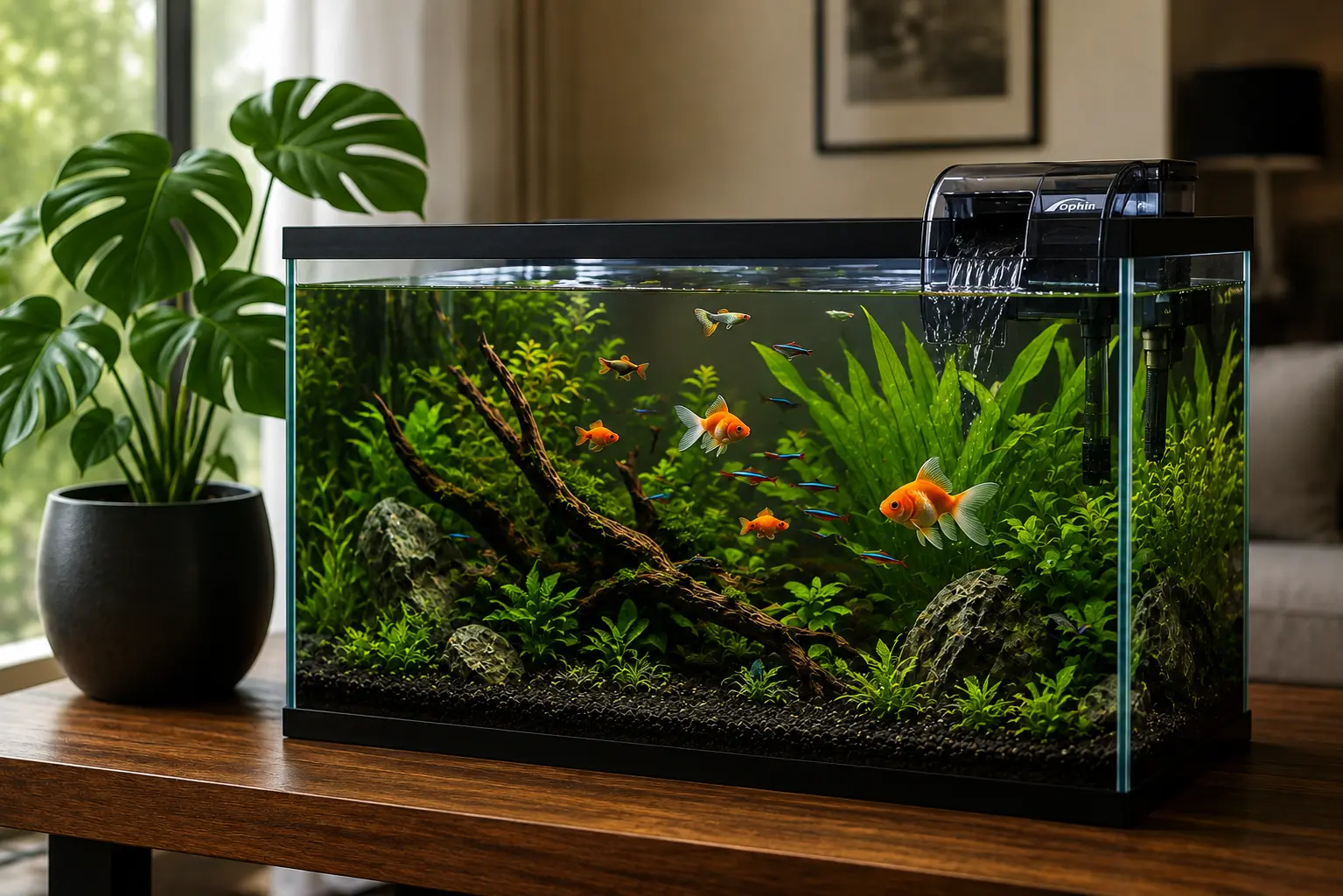
Learning how to set up your first aquarium the right way is the #1 factor that decides whether your early weeks are smooth or full of murky water and lost fish. Jumping in without a plan is where most beginners go wrong.
Whether you’re building a serene home display or setting up a tank for your family, following the right order — choosing the right tank, setting up proper filtration, and cycling your water — guarantees a healthy, thriving ecosystem.
Here is your step-by-step guide to setting up a successful freshwater aquarium from scratch.
Step 1: Choose the Right Tank Size
When starting out, bigger is actually easier. Small nano tanks (under 5 gallons) suffer from rapid changes in water quality and temperature. A larger volume of water acts as a buffer, making maintenance far more forgiving.
- 5–10 Gallons: Ideal for a single Betta fish or a small school of nano fish like Guppies.
- 15–20 Gallons (Recommended Starter Size): The sweet spot for beginners. Fits a community of peaceful species (like Guppies, Platies, and Color Widow Tetras) without overwhelming your space.
Location Tip: Place your tank away from direct sunlight (to prevent excessive algae growth) and away from doors or AC vents that cause sudden temperature swings — a common issue in Indian homes where the AC and the tank often end up in the same room.
Step 2: Install the Right Filtration System
Your filter is the heart of your aquarium. It keeps the water clear, traps debris, and houses beneficial bacteria that process fish waste.
Depending on your tank size and budget, choose one of these three basic filter types:
- Sponge Filters: Powered by an air pump, these are gentle, ultra-budget-friendly, and perfect for shrimp, fry, or Betta tanks.
- Hang-On-Back (HOB) Filters: Highly popular for 10-to-20-gallon tanks. They offer multi-stage filtration (mechanical, chemical, and biological) and sit neatly on the rim without taking up space inside. Check out reliable options like Dophin or SunSun HOB filters.
- Internal Filters: Compact, fully submerged filters that provide strong water circulation for small-to-medium setups.
Step 3: Add Substrate and Decor
Before adding water, prep your tank interior:
- Rinse everything. Rinse your gravel, sand, and hardscape (rocks/driftwood) under tap water to remove dust. Never use soap or detergents.
- Layer the substrate. Slope gravel or aquarium soil slightly higher in the back than in the front to create visual depth.
- Place decorations. Arrange rocks, artificial plants, or easy live plants (like Anubias or Java Fern).

Step 4: Fill the Tank & Condition the Water
Slowly fill your tank with tap water (pouring onto a small saucer placed over the gravel prevents stirring up the substrate).
Crucial Step: Tap water contains chlorine and chloramines, which are toxic to fish and destroy beneficial bacteria. Always treat your fresh tap water with a quality water conditioner before turning on your filter.
Step 5: Cycle the Water Before Adding Fish
This is where most beginners make a mistake: never add all your fish on Day 1.
Your tank must undergo the Nitrogen Cycle — a 2 to 3-week process where beneficial bacteria establish inside your filter to convert toxic fish waste (ammonia) into safe nitrates.
Quick Cycling Steps:
- Turn on your filter and heater (if applicable).
- Add a beneficial bacteria starter to instantly seed your filter media.
- Let the tank run empty for several days to a week while monitoring water clarity and parameters.
- Introduce fish gradually — 2 or 3 hardy fish at a time — so your bio-filter can adjust to the waste load.
How do you know it’s ready? Before adding fish, use an aquarium test kit to check ammonia, nitrite, and nitrate levels. A fully cycled aquarium should show zero ammonia, zero nitrite, and a small amount of nitrate.
Frequently Asked Questions
How long should I cycle my aquarium before adding fish?
Most freshwater aquariums need around 2–4 weeks to complete the nitrogen cycle. A beneficial bacteria product can help establish the biological filter faster, but testing the water is the safest way to know when the tank is ready.
Can I use tap water in my aquarium?
Yes, but always treat tap water with a quality water conditioner to remove chlorine and chloramine before adding it to your aquarium.
What is the best aquarium size for beginners?
A 15–20 gallon aquarium is usually the best choice because it provides stable water parameters and enough space for a peaceful community of freshwater fish.
Everything You Need for Your First Aquarium
At Filial Aquatics, we’ve helped hundreds of beginners build healthy freshwater aquariums. From beginner-friendly HOB filters and water conditioners to aquarium soil and live plants, you’ll find everything you need in one place.
Visit our showroom in Madurai for personalized guidance, or shop online to get started today.
📍 Visit Our Gallery in Madurai: Stop by our physical display room to see running setups, test water samples, and get personalized advice from our team before buying!
🌐 Shop Online: Browse our full range at filialaquatics.in


